The Importance of Book Critiques
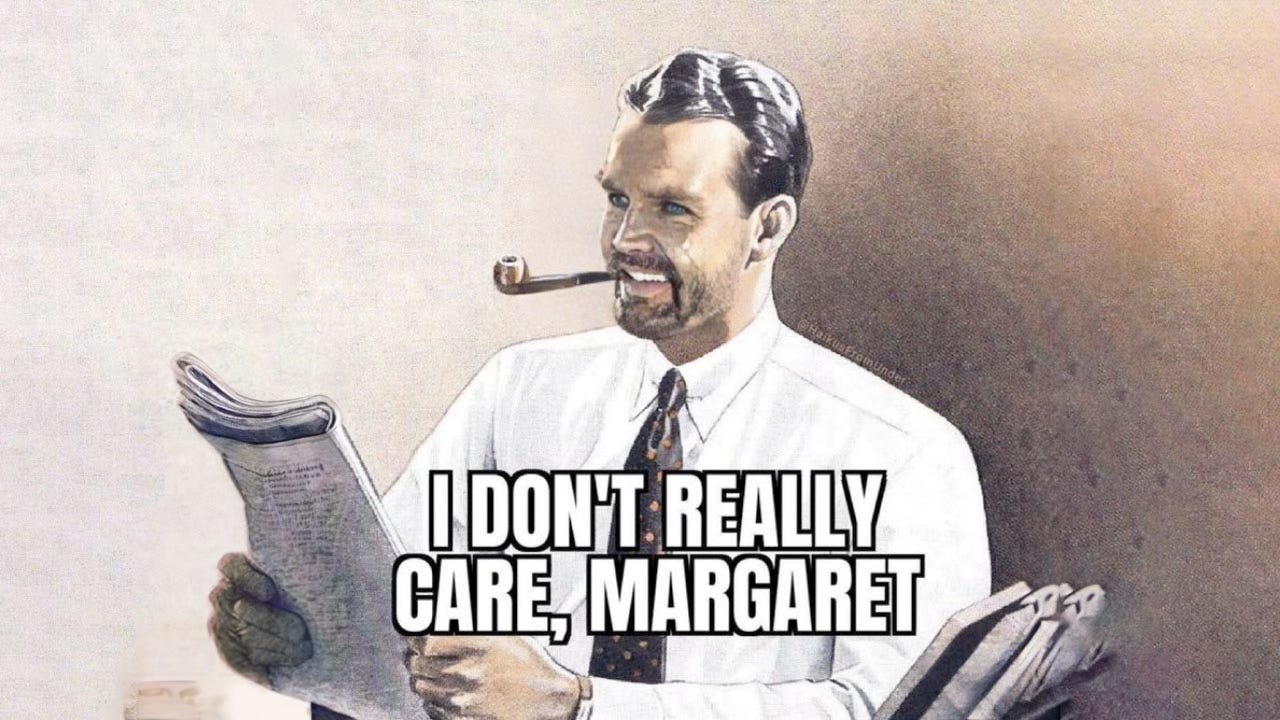
Back in the day, before we had names for complaining, pessimistic individuals like Karen1 or Margaret.2
We used to call such types Negative Nelly’s. I never really thought about where Nelly came from. Perhaps back in the 1800s, there was an incident in which a woman named Nelly was excessively critical of the way her neighbor was milking cows led to her characterization with complaining or rudeness. Nelly’s family was relieved when a woman named Debbie dished on a waitress one afternoon in the 1950s and infamously became Debbie Downer, replacing Nelly as a favorite colloquialism. I’m sure all of Debbie’s ancestors are thankful for Karen.
What do these women have to do with book critiques?
No one likes writing negative book reviews. In fact in our culture today, it’s hard to find refreshing, transparent and charitable critique. In the Christian book industry in particular, if an author has name recognition or a large platform, it’s extremely rare for someone to honestly and simply say, “It wasn’t a good book.” Books are published that should have never seen the light of day simply because of an author’s platform.
Christian culture is so nice that we’re not allowed to help people sift through the wheat and chaff. However, without honest and charitable critique we will continue to waste time buying and reading books that simply don’t have much to offer. It’s always better to say you should read this book instead of that book– just from the perspective of stewardship. We only have a limited amount of time and there’s a lot of things to read. In fact, there’s a lot of good things to read.
All that brings me to two books whose authors are well known and recognized. These authors are also beloved in many circles. You can probably guess where I’m going. I would not recommend either of these books.
Embracing Rhythms of Work and Rest: From Sabbath to Sabbatical and Back Again by Ruth Hailey Barton
The Hidden Wound by Wendell Berry
It’s rare for me to give up on a book. I gave up on Barton’s book. I finished Berry’s book. Here’s some brief thoughts on why I wouldn’t recommend either book.
Sabbath to Sabbatical
I was eager to read Barton’s book. The challenge of cultivating and enjoying a biblical balance between ministry life (work) and one’s personal spiritual life is real. As a pastor, I want to be fresh, available and present for my church, people I meet, and especially for my family.
Barton is a fantastic writer. And that was my problem. She wrote so well that I found myself not evaluating her premises in light of scripture. When it finally dawned on me that she spoke more to my desire to experience restfulness in living and less from a scripturally anchored logic, I grew uncomfortable.
We should all desire holy pause in our life. Barton, however, seemed to advocate a legalistic form of Sabbath observance. To the Pharisees, Jesus said, “The Sabbath was made for man and not man for the Sabbath.”3 Barton apparently interprets that verse differently than I do. The Sabbath for the New Testament Christian is an invitation and opportunity. It is not a mandate. While we should intentionally practice regular rest and worship, Jesus demonstrated a remarkable relaxation of the Sabbath that left the Phrarisees wondering about His spirituality for not observing according to their prescriptions.
Early in the book, Barton said, “The sabbath is the most precious present humankind has received from the treasure house of God.” (14) She must have forgotten Jesus. Jesus is the most precious gift we’ve received. I would add our salvation is a precious gift as well. When authors make emphatic statements like that, they must be weighed. That one came up wanting. I began to make notations in the margins, questioning her points, when I wasn’t being wowed by Barton’s writing. It was mid-way through the book that I had to back out. I realized by theology radar had been working overtime as I read the book. While enjoying her honest prose and skill in communicating, the book is simply not substantive. Her use of scripture is specious at times. She quotes her daughter and a friend at length in two sections. Neither contribution seemed to amplify Barton’s points, and some of the content contradicted Barton’s assertions.
IMHO, if we’re not careful, a pursuit of an idealized “Sabbath” becomes an idol in itself. We can create a day that we think is dedicated to pursuit of God but which looks remarkably like a pursuit of comfort, inactivity and selfishness.
I commend Barton for her writing skill. Most likely, I’ll give her another try in another book. However, if you are wanting a biblical treatment of how Christians should embrace and enjoy Sabbath, I’d recommend The Rest of God by Mark Buchanan. I’m also hopeful for a book that will come out this month - Sabbath Gospel: A New Narrative of Time, Rest, and the Work of the Church by G. P. Wagenfuhr and Amy J. Erickson. Best way to start? Read Scott Hubbard’s excellent article on Desiring God - Should Christians Keep the Sabbath?
The Hidden Wound
Berry’s book was definitely provocative. Because he’s such a popular (and incredible) writer, it was easy to get swept up into his narrative and assertions without critique. The Village Voice described this book as “one of the most humane, honest, liberating works of our time.” It’s beautiful, though convicting narrative of racism in our country.
Berry makes several assertions in the book from his own personal experience that simply just don’t hold water, however. Yet, because of his ethereal writing, it’s often easy to be captivated by the narrative rather than practicing critical thinking.
The author has much to say about his perceived failure of the American church to combat racism and slavery. His limited experience ignores the reality that it was Christian pastors and churches who doggedly pursued emancipation and taught the cherished value of all peoples before God. Yet, his experience will find you nodding your head as well. Unfortunately, many churches - especially in the South - defended slavery, twisting scripture to support their views. In one of his assertions in which he aims at Southern Baptists in particular, he said, “The moral obligation was cleanly excerpted from religion. The question of how best to live on the earth, among one’s fellow creatures, was permitted to atrophy, and the churches devoted themselves exclusively and obsessively with the question of salvation.” He may not be wrong about that. However, the “why” behind his opinion at that point stoops to the ridiculous - “the churches, with their strong ties to the pocketbooks of racists, felt obliged to see it another way…”
Toward the end, the book began to feel more like a screed and well-written rant rather than a helpful commentary on the history of racism. Mind you, it’s very well-written! I would encourage you to read it, even though I can’t recommend its message to you. What Berry has contributed should be digested, but it needs to be filtered.
Gracious critique
When posting less-than-stellar reviews of books, I am mindful that I’m also an author. With one book out and another that I’m presenting to publishers/agents, I know that I also want gracious critique.
I want to thank those on Goodreads and the brave bloggers who do provide a contrarian perspective on books. I find myself in the habit of always skimming the 1 to 2-star reviews on Goodreads simply to see if they make legitimate or substantive points about a book. You’ll often find that these reviews are more informed and offer better perspective than simply fans that write such unrealistic reviews like, “This is the best book I’ve ever read on this topic!” When I see things like that in a 5-star view I simply conclude they’ve never read another book on that topic.
I’ll conclude just by encouraging you to lean in into providing charitable critique. Read it. Offer it. It’s biblical, practical and helpful. In fact, the Proverbs are full of the importance of practicing discernment. When you offer a charitable critique, you’re helping many of us invest our time more wisely, and you also help authors grow in their skill by providing good feedback.
“The simple believe everything, but the prudent give thought to their steps.” (Proverbs 14:15)
“Test all things. Hold on to what is good.” (1 Thessalonians 5:21)
Here’s hoping you liked this entry, Margaret.
No one really knows where the pejorative “Karen” originated but here’s some perspective from dictionary.com’s slang dictionary:
“Karen has widely been credited to Black Twitter in the 2010s. Another suggestion is that it comes from a 2005 bit by Dane Cook called ‘The Friend Nobody Likes.’ (The friend was named Karen.) An additional explanation is that it stems from the character Karen in the 2004 film Mean Girls, who’s the subject of this popular quote: ‘Oh, my God, Karen, you can’t just ask someone why they’re white.’ It’s also been put forth that Karen comes from the even earlier 1990 film Goodfellas, in which one of the characters is named Karen.” (Dictionary.com, July 2020)
“Margaret was made infamous by an exasperated retort from Vice President JD Vance to CBS Face the Nation's Margaret Brennan, “I don’t really care, Margaret.”
Mark 2:27